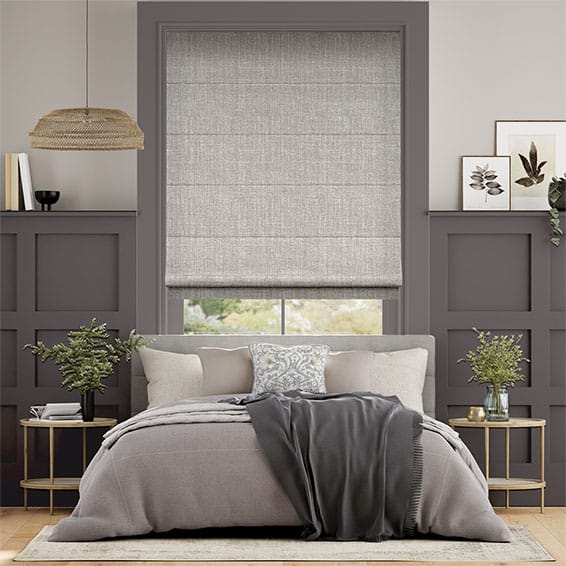
Roman blinds represent one of the most elegant and timeless window treatment options available today. Combining the soft, luxurious appearance of curtains with the practicality and space-saving benefits of blinds, Roman blinds have become a favourite choice for homeowners seeking sophistication and functionality in equal measure.
In this comprehensive guide, we'll explore everything you need to know about Roman blinds – from their fascinating history to the various styles available today, helping you decide if they're the right choice for your home.
Top Tip
When selecting fabric for Roman blinds, consider both aesthetics and function. Heavier fabrics like linen or cotton create luxurious, dramatic folds and offer better insulation, whilst lighter fabrics filter more light and work well in smaller spaces. Always request fabric samples to see how they drape and how light passes through them before making your final decision.
Defining the Roman Blind
A Roman blind is a fabric window covering that draws up into elegant horizontal pleats or folds when raised, and lies flat and smooth when fully extended. Unlike traditional curtains that draw to the sides, or roller blinds that roll around a tube, Roman blinds fold up vertically in a concertina fashion, creating a distinctive stacked appearance at the top of the window.
The mechanism typically consists of cords running through rings or loops sewn to the back of the fabric at regular intervals. When the cord is pulled, the fabric gathers into neat, evenly-spaced folds. When lowered, the blind presents a smooth, flat surface that showcases the fabric beautifully.
Key Characteristics
- Fabric construction – Made from a single piece of fabric, often lined for improved insulation and light control
- Horizontal folding – Creates neat pleats when raised, typically stacking 20-25cm from the top when fully open
- Flat appearance when lowered – Provides an uninterrupted fabric surface perfect for displaying patterns and textures
- Versatile operation – Available with cord, chain, or motorised lifting mechanisms
- Made-to-measure – Typically custom-made to fit your specific window dimensions
The Rich History of Roman Blinds
Despite their name, Roman blinds as we know them today aren't directly descended from ancient Roman window coverings. The name instead refers to the folding technique, which is reminiscent of how Roman sails and standards folded.
Ancient Origins
The concept of fabric window coverings dates back thousands of years. Ancient Romans did use damp cloth coverings to cool their homes and filter dust from windows. These practical textiles laid the groundwork for decorative window treatments, though they bore little resemblance to modern Roman blinds.
18th Century Development
The Roman blind style as we recognise it today emerged in the 18th century during the neoclassical revival period. European designers, inspired by ancient Roman art and architecture, created window treatments that evoked classical simplicity and clean lines. The horizontal folding mechanism was developed as an elegant alternative to heavy draped curtains.
Victorian Refinement
During the Victorian era, Roman blinds evolved further with improved mechanisms and more elaborate fabric choices. They became associated with refined taste and were particularly popular in formal rooms and libraries. The Victorians appreciated how Roman blinds provided light control without the fuss of elaborate swags and tails.
Modern Renaissance
Roman blinds experienced a significant revival in the late 20th and early 21st centuries as minimalist and contemporary interior design styles gained popularity. Modern manufacturing techniques, diverse fabric options, and improved operating systems have made Roman blinds more accessible, affordable, and versatile than ever before.
Today's Roman blinds marry centuries-old aesthetic principles with cutting-edge technology, offering motorisation, smart home integration, and innovative fabrics that provide UV protection, thermal insulation, and moisture resistance.
Different Roman Blind Styles
One of the most appealing aspects of Roman blinds is the variety of folding styles available. Each creates a distinctly different aesthetic, allowing you to choose the perfect look for your interior design scheme.
Flat Roman Blinds
The most common and contemporary style, flat Roman blinds are characterised by their smooth, unbroken surface when lowered and neat horizontal folds when raised.
Best for:
- Modern and minimalist interiors
- Showcasing bold patterns or prints
- Maximising light when fully lowered
- Rooms where clean lines are desired
Characteristics: Creates even, flat folds approximately 20-30cm apart when raised. The fabric lies completely flat when lowered, with no decorative flourishes. This style is most economical and highlights the fabric pattern beautifully.
Hobbled (Soft Fold) Roman Blinds
Also known as looped or soft fold blinds, hobbled Romans feature gentle, continuous folds that remain visible even when the blind is fully lowered. This creates a softer, more relaxed appearance.
Best for:
- Traditional and country-style interiors
- Bedrooms where a softer look is desired
- Plain fabrics that benefit from added texture
- Creating visual interest without busy patterns
Characteristics: Requires more fabric than flat styles (typically 30-40% more), creating permanent soft folds even when extended. The cascading folds add dimension and luxury to the window treatment.
Waterfall (Cascade) Roman Blinds
Waterfall Roman blinds feature a continuous swooping fold that creates an elegant curved cascade when the blind is partially raised. This sophisticated style offers a formal, luxurious appearance.
Best for:
- Formal living rooms and dining rooms
- Creating a focal point in a room
- Large windows where the cascading effect can be fully appreciated
- Traditional and elegant interior styles
Characteristics: The fabric drapes in continuous loops, creating an undulating appearance even when lowered. This style uses the most fabric and creates the most dramatic effect, particularly effective with luxurious materials like silk or velvet.
Balloon Roman Blinds
Balloon Romans combine elements of Roman blinds with Austrian blinds, creating billowing, gathered folds at the bottom even when the blind is fully lowered.
Best for:
- Romantic and feminine bedroom décor
- Period properties seeking authentic historical styling
- Rooms where an opulent, luxurious feel is desired
- Shorter windows where the gathered bottom won't obstruct too much light
Characteristics: Features permanent gathered poufs at the bottom that become more pronounced when the blind is raised. Requires significantly more fabric than flat styles and creates a distinctly Victorian or romantic aesthetic.
Pros of Flat Roman Blinds
- Clean, contemporary appearance
- Most economical style
- Showcases fabric patterns beautifully
- Maximum light when lowered
Pros of Hobbled Roman Blinds
- Softer, more luxurious appearance
- Adds texture to plain fabrics
- Requires 30-40% more fabric (higher cost)
- Permanent folds can collect dust
Relaxed Roman Blinds
A variation of the flat Roman blind, the relaxed style features a gentle curve or swag at the bottom when the blind is lowered, softening the otherwise straight lines.
Best for:
- Transitional spaces bridging modern and traditional styles
- Softening contemporary interiors
- Kitchen and casual dining areas
- Windows with interesting architectural features
Characteristics: Combines the clean appearance of flat Romans with a softer, more casual bottom edge. The gentle curve adds visual interest without overwhelming the space.
Fabric Selection Guide
The fabric you choose for your Roman blinds significantly impacts their appearance, functionality, and longevity. Here's a comprehensive guide to making the right choice:
Weight and Drape
Lightweight fabrics (cotton, linen, polyester blends):
- Create crisp, clean folds
- Allow more light filtration
- Easier to operate manually
- Better for smaller windows
- May require lining for adequate privacy
Medium-weight fabrics (cotton-linen blends, heavier polyesters):
- Versatile for most applications
- Balance between structure and drape
- Good insulation properties
- Suitable for most window sizes
- Hold shape well over time
Heavyweight fabrics (velvet, thick wool, heavy cotton):
- Create dramatic, luxurious folds
- Excellent insulation and sound dampening
- Maximum privacy and light blocking
- May require motorisation for larger windows
- Best for formal spaces
Fabric Types
Natural Fabrics:
Cotton: The most popular choice for Roman blinds, cotton offers versatility, easy care, and comes in countless colours and patterns. It's affordable, widely available, and can be treated for various properties (stain resistance, UV protection, etc.).
Linen: Provides a naturally textured, elegant appearance with excellent draping properties. Linen has natural insulating qualities and a timeless aesthetic but may wrinkle more than cotton and typically costs more.
Silk: The luxury option, silk creates stunning waterfall or cascade Romans with its natural sheen and beautiful drape. However, it's expensive, delicate, prone to fading, and requires professional cleaning.
Wool: Excellent for insulation and sound dampening, wool creates a cosy, substantial blind. It's naturally flame-retardant but may be too heavy for larger windows without motorisation and can be expensive.
Synthetic Fabrics:
Polyester: Practical and durable, polyester resists wrinkles, fading, and moisture. It's easy to clean, affordable, and available in numerous colours and patterns. Modern polyesters can beautifully mimic natural fabrics.
Polyester-cotton blends: Combine the best of both worlds – cotton's natural look and feel with polyester's durability and easy care. These blends offer excellent value and performance.
Acrylic: Highly resistant to fading and moisture, acrylic is ideal for sunny rooms or high-humidity areas. It's less common for Roman blinds but offers excellent longevity.
Linings and Backings
Most Roman blinds benefit from lining, which improves their functionality and longevity:
Standard lining:
- Provides structure and body to the blind
- Enhances privacy by making fabric less transparent
- Protects face fabric from UV damage
- Improves the blind's appearance from outside
Blackout lining:
- Blocks up to 100% of light
- Essential for bedrooms, home cinemas, or shift workers
- Provides additional insulation
- Available in white or black backing
Thermal lining:
- Significantly improves insulation properties
- Reduces heating and cooling costs
- Often includes moisture-resistance
- Ideal for older properties or single-glazed windows
Patterns and Colours
Solid colours: Versatile and timeless, solid colours work with any interior style and won't date. They're ideal for rooms with patterned furnishings and create a clean, cohesive look.
Subtle patterns: Small-scale patterns, textures, or tone-on-tone designs add visual interest without overwhelming. They work well in most rooms and can help disguise minor marks or wear.
Bold patterns: Large-scale prints or geometric designs work beautifully on flat Roman blinds where the pattern can be fully appreciated. They create a focal point and are perfect for making a design statement.
Stripes: Horizontal stripes can make windows appear wider; vertical stripes (less common in Romans) can add height. Ensure pattern alignment matches across multiple blinds in the same room.
Motorisation Options
Modern Roman blinds can be fitted with sophisticated motorised operating systems that enhance convenience, safety, and smart home integration.
Why Choose Motorisation?
- Safety: Eliminates dangerous cords, crucial for homes with young children or pets
- Convenience: Operate blinds with a button press, remote control, or smartphone
- Accessibility: Ideal for hard-to-reach windows or people with mobility limitations
- Precision control: Set blinds to exact positions for optimal light management
- Automation: Programme blinds to open and close on schedules
- Security: Simulate occupancy when away from home
Power Options
Battery-powered motors:
- No wiring required – ideal for retrofitting
- Cleaner appearance without visible cables
- Batteries typically last 1-2 years
- Slightly more expensive long-term due to battery replacement
Mains-powered motors:
- Requires professional installation and wiring
- No ongoing battery costs
- More powerful for large or heavy blinds
- Best installed during construction or renovation
Solar-powered motors:
- Environmentally friendly option
- No wiring or battery changes required
- Best for south-facing windows with good light
- May struggle in very dark rooms
Smart Home Integration
Modern motorised Roman blinds can integrate with popular smart home systems:
- Amazon Alexa voice control
- Google Home compatibility
- Apple HomeKit integration
- IFTTT automation possibilities
- Integration with lighting and heating systems
Room Suitability Guide
Roman blinds work beautifully in most rooms, but certain styles and fabrics suit specific spaces better than others:
Living Rooms
Recommended styles: Flat, waterfall, or relaxed Romans
Fabric suggestions: Medium-weight linens, cotton-linen blends, or quality polyester in solid colours or large-scale patterns
Considerations: Choose light-filtering rather than blackout fabrics to maintain ambience. Consider motorisation for large windows or patio doors.
Bedrooms
Recommended styles: Flat or hobbled Romans
Fabric suggestions: Blackout-lined fabrics in colours that complement your bedroom scheme
Considerations: Complete light blocking is often desired. Ensure adequate privacy, especially at ground level. Consider cordless or motorised options for safety.
Kitchens
Recommended styles: Flat or relaxed Romans
Fabric suggestions: Polyester or polyester-cotton blends that resist moisture and are easy to clean
Considerations: Keep blinds away from cooking areas to avoid grease splatter. Choose washable fabrics. Avoid very pale colours that show stains easily.
Bathrooms
Recommended styles: Flat Romans
Fabric suggestions: Moisture-resistant polyester, possibly with antimicrobial treatment
Considerations: Essential to choose moisture-resistant fabrics and components. Ensure adequate ventilation to prevent mould. Consider privacy requirements carefully.
Home Offices
Recommended styles: Flat Romans
Fabric suggestions: Light-filtering fabrics that reduce screen glare without blocking natural light
Considerations: Precise light control important for video calls and screen work. Motorisation or remote control useful for adjusting throughout the day.
Pairing Roman Blinds with Curtains
Combining Roman blinds with curtains creates a layered window treatment that offers maximum versatility and a luxurious, designer finish.
Benefits of Layering
- Enhanced insulation: Two layers provide superior thermal and acoustic insulation
- Light control flexibility: Adjust each layer independently for precise light management
- Added luxury: Layering creates depth, texture, and visual interest
- Seasonal adaptation: Keep curtains open in summer, close them in winter for extra warmth
- Privacy options: Close the blind for daytime privacy whilst keeping curtains open, or close both for complete privacy
Design Principles
Colour coordination:
- Monochromatic scheme – Use different shades of the same colour for sophisticated cohesion
- Complementary colours – Choose colours opposite on the colour wheel for bold contrast
- Neutral blind with patterned curtains – Let decorative curtains shine against a simple blind
- Matching scheme – Use the same or very similar colours for seamless integration
Pattern mixing:
- Keep one element solid if the other is patterned
- Mix different scales of pattern (large with small)
- Ensure patterns share at least one colour for cohesion
- Consider the overall room scheme to avoid pattern overload
Hardware considerations:
- Mount the blind inside the recess and curtains outside for a neat layered look
- Ensure curtain poles sit far enough above and beyond the window so curtains don't obstruct the blind
- Choose curtain hardware that complements your interior style
- Consider curtain hold-backs to frame the window beautifully
Care and Cleaning
Proper maintenance ensures your Roman blinds look beautiful and function perfectly for years to come.
Regular Maintenance
Weekly dusting:
- Use a soft brush attachment on your vacuum cleaner
- Work from top to bottom in gentle, downward strokes
- Alternatively, use a microfibre duster
- Regular dusting prevents dirt becoming embedded in the fabric
Monthly checks:
- Inspect cords and mechanisms for wear or damage
- Ensure blinds raise and lower smoothly
- Check for any loose or damaged components
- Wipe down headrail and bottom bar with a damp cloth
Deep Cleaning
Professional cleaning (recommended annually):
- Safest option for expensive or delicate fabrics
- Specialists have equipment to handle Roman blind structure
- Essential for silk, velvet, or very large blinds
- Costs typically £30-£60 per blind
Home cleaning (suitable for washable fabrics only):
- Remove blind from window and dismantle carefully, noting how it goes back together
- Remove rods, cords, and hardware
- Check care label for washing instructions
- Hand wash or machine wash on gentle cycle with mild detergent
- Rinse thoroughly to remove all soap residue
- Lay flat or hang to dry – never tumble dry
- Iron on low heat whilst still slightly damp if necessary
- Reassemble once completely dry
Spot Cleaning
For minor marks between deep cleans:
- Blot (don't rub) fresh spills immediately with a clean, dry cloth
- Use a slightly damp cloth with mild soap for stubborn marks
- Test any cleaning solution on an inconspicuous area first
- Blot with clean water to remove soap residue
- Air dry completely before raising the blind
Troubleshooting Common Issues
Even well-made Roman blinds occasionally develop problems. Here's how to address common issues:
Blind Won't Raise Evenly
Possible causes:
- Tangled cords inside the headrail
- Uneven cord tension
- Debris in the cord lock mechanism
Solutions:
- Lower the blind fully and raise again slowly
- Check for and remove any obstacles
- Inspect and clean the cord lock
- Adjust cord tension if the mechanism allows
- Consult a professional if the problem persists
Fabric Sagging or Drooping
Possible causes:
- Loose or damaged dowel rods
- Fabric stretching over time
- Insufficient support for blind width
Solutions:
- Check all dowel rods are properly inserted and secure
- Replace any bent or broken rods
- May require professional adjustment or remaking if fabric has stretched
- Ensure blind isn't too wide for its construction (typically max 240cm without centre support)
Folds Not Sitting Evenly
Possible causes:
- New blind that hasn't "trained" yet
- Washing or steam has affected fabric memory
- Incorrect folding technique
Solutions:
- For new blinds, raise and lower several times to train folds
- Manually fold the blind in the correct pattern and steam lightly
- Leave in folded position for 24-48 hours to set
- Use blind ties to maintain fold pattern when raised
Motor Not Responding (Motorised Blinds)
Possible causes:
- Dead batteries (battery-powered motors)
- Lost pairing with remote
- Obstruction preventing movement
- Motor fault
Solutions:
- Replace batteries if applicable
- Re-pair remote with blind following manufacturer instructions
- Check for and remove any obstructions
- Reset motor according to manual
- Contact manufacturer if under warranty
Conclusion: The Timeless Elegance of Roman Blinds
Roman blinds masterfully blend form and function, offering sophisticated style alongside practical light control and privacy. Their rich history dating back centuries speaks to their enduring appeal, whilst modern innovations ensure they remain relevant in contemporary homes.
Whether you choose flat Romans for clean, modern lines, hobbled Romans for soft texture, or cascading waterfalls for dramatic luxury, there's a Roman blind style perfectly suited to your home. Combined with the right fabric – from practical polyester for busy family spaces to sumptuous silk for formal rooms – Roman blinds can transform any window into a beautiful focal point.
The versatility of Roman blinds extends beyond aesthetics. They work beautifully alone or layered with curtains, fit seamlessly into any room from bedrooms to bathrooms, and can be adapted with motorisation for ultimate convenience and smart home integration.
With proper care and maintenance, quality Roman blinds will serve you beautifully for many years, making them not just a window covering but a worthwhile investment in your home's comfort, style, and value.
Key Takeaway
Roman blinds offer unmatched versatility for UK homes, combining the soft elegance of curtains with the practical functionality of blinds. With five distinct styles ranging from contemporary flat Romans to romantic balloon styles, countless fabric options, and the ability to work beautifully alone or layered with curtains, Roman blinds adapt to any interior design scheme whilst delivering excellent light control, insulation, and lasting value.
Summary
Roman blinds masterfully blend timeless elegance with modern functionality, offering sophisticated window treatments suitable for any room and design style. Their unique folding mechanism creates beautiful horizontal pleats when raised whilst lying smooth when lowered, showcasing fabrics beautifully. With options from minimalist flat styles to luxurious cascading waterfalls, Roman blinds provide exceptional light control, excellent insulation, and enduring appeal. Combined with extensive fabric choices, lining options for enhanced performance, and compatibility with smart home systems, Roman blinds represent a worthwhile investment that enhances comfort, style, and value for years to come.
Ready to explore Roman blinds for your home? Contact our team for expert advice on styles, fabrics, and custom solutions perfectly tailored to your windows and lifestyle.